Health and Safety Policy for Flat Clearance Mill Hill
 Purpose: This Health and Safety policy sets out the principles and operational controls for flat clearance and related rubbish removal activities undertaken by our clearance team. It outlines responsibilities, safe systems of work, and risk management approaches to ensure the safety of staff, contractors, residents, and the public during any flat clearance or rubbish collection operation in and around residential buildings.
Scope: The policy applies to every stage of a flat clearance, from site assessment through to waste transport and disposal. It covers manual handling, hazardous materials identification, use of mechanical aids, vehicle operations, and site housekeeping. The objective is to provide consistent, lawful, and practical health and safety measures for rubbish clearance and flat vacating services.
 Principles: We commit to compliance with applicable health and safety regulations and to the continual improvement of our safety performance. Key principles include proactive risk assessment, adequate training, provision of suitable personal protective equipment (PPE), and clear communication of safe work practices for all flat clearance and rubbish disposal activities.
Responsibilities and Organisation
Management will ensure that adequate resources are allocated for health and safety and that roles and responsibilities are clearly defined. Supervisors will ensure safe systems of work are followed during each flat clearance project and that teams are briefed on site-specific hazards prior to commencement.
Employees and operatives engaged in rubbish removal and flat clearance must follow instructions, use required protective equipment, report hazards promptly, and participate in training. Visitors and subcontractors must comply with site rules and notify the site supervisor of any concerns.
Contractors are required to provide evidence of competence and insurance, and to cooperate with risk control measures. All parties must understand emergency arrangements and reporting procedures for incidents or near-misses associated with clearance activities.
Risk Assessment and Safe Systems
 Every clearance job will be preceded by a formal risk assessment. Typical hazards include manual handling injuries, sharps and contaminated waste, asbestos-containing materials mistakenly present, slip and trip risks, and vehicle movement. Control measures will be recorded and communicated, and the assessment reviewed whenever conditions change.
Safe systems of work include the use of mechanical lifting aids for heavy items, team lifting protocols for bulky furniture, segregation of recyclable and hazardous waste, and secure loading practices for transit. Clear signage and cordons will be used where necessary to protect residents and pedestrians during rubbish removal operations.
Specific procedures address the identification and safe handling of hazardous materials encountered during flat clearances. Where suspected hazardous substances are found, work will stop and specialist removal arranged in accordance with regulatory guidance. Minor hazardous items will be isolated, packaged, and labelled for safe disposal.
Training and competence are essential. Staff will receive induction training on general health and safety, job-specific instruction on flat clearance techniques, manual handling, PPE use, and waste categorisation. Regular refresher sessions and toolbox talks will reinforce safe practices for rubbish collection and recycling operations.
Personal Protective Equipment: Appropriate PPE will be provided and maintained. This includes gloves, high-visibility clothing, protective footwear, and eye protection as required. The policy emphasises correct selection and use of PPE as part of the overall risk control strategy, not as the sole control.
Vehicles and equipment used in flat clearance services will be inspected and maintained to a documented schedule. Drivers and operators are required to be licensed and competent. Loading and unloading procedures are designed to prevent overloading, shifting of loads, and movement-related incidents during rubbish removal journeys.
Emergency Procedures and First Aid: Emergency arrangements include plans for worker injury, fire, or hazardous material exposure. First aid provision and trained first aiders will be available on site as appropriate. Incidents will be recorded, investigated, and lessons learned integrated into future operations to prevent recurrence.
Monitoring, auditing, and review mechanisms will track compliance with this health and safety policy. Regular site inspections, performance reviews, and audits will identify improvement opportunities for flat clearance and rubbish collection services. Corrective actions will be documented and implemented in a timely manner.
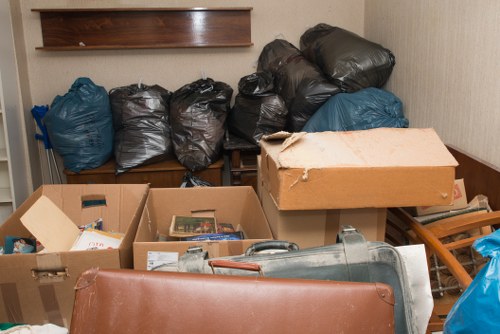 Reporting and recordkeeping obligations cover incident reports, risk assessments, training records, equipment checks, and waste transfer documentation. These records support legal compliance and provide evidence of due diligence in managing risks associated with clearance work and rubbish disposal.
 Continuous Improvement and Review: This policy will be reviewed at least annually or following a significant incident, change in legislation, or major change to operations. Stakeholder feedback and audit findings will inform updates. The aim is to maintain robust health and safety standards across all flat clearance and rubbish removal activities.
Behavioural Safety: The organisation promotes a safety culture in which everyone is encouraged to speak up about risks and to take responsibility for their own safety and that of others. Clear leadership, visible supervision, and positive reinforcement will support safe conduct on every job.
Legal and Regulatory Compliance: This policy aligns with relevant health and safety legislation and waste management requirements applicable to rubbish removal and flat clearance services. It is intended as an operational statement of commitment and does not substitute for the statutory duties defined by law, which remain the responsibility of the organisation and its managers.
- Key commitments: Provide safe systems of work, competent staff, and appropriate equipment for all clearances.
- Ongoing focus: Identify hazards early and control them effectively to protect people and property.
- Accountability: Management and staff share responsibility for implementing and maintaining safety standards in rubbish clearance operations.
Approved by the board and senior management, this policy is the basis for operational procedures and staff responsibilities in all flat clearance and rubbish removal activities. Review dates and amendment history will be recorded by the safety manager to ensure transparency and effective control of risk in every project.